
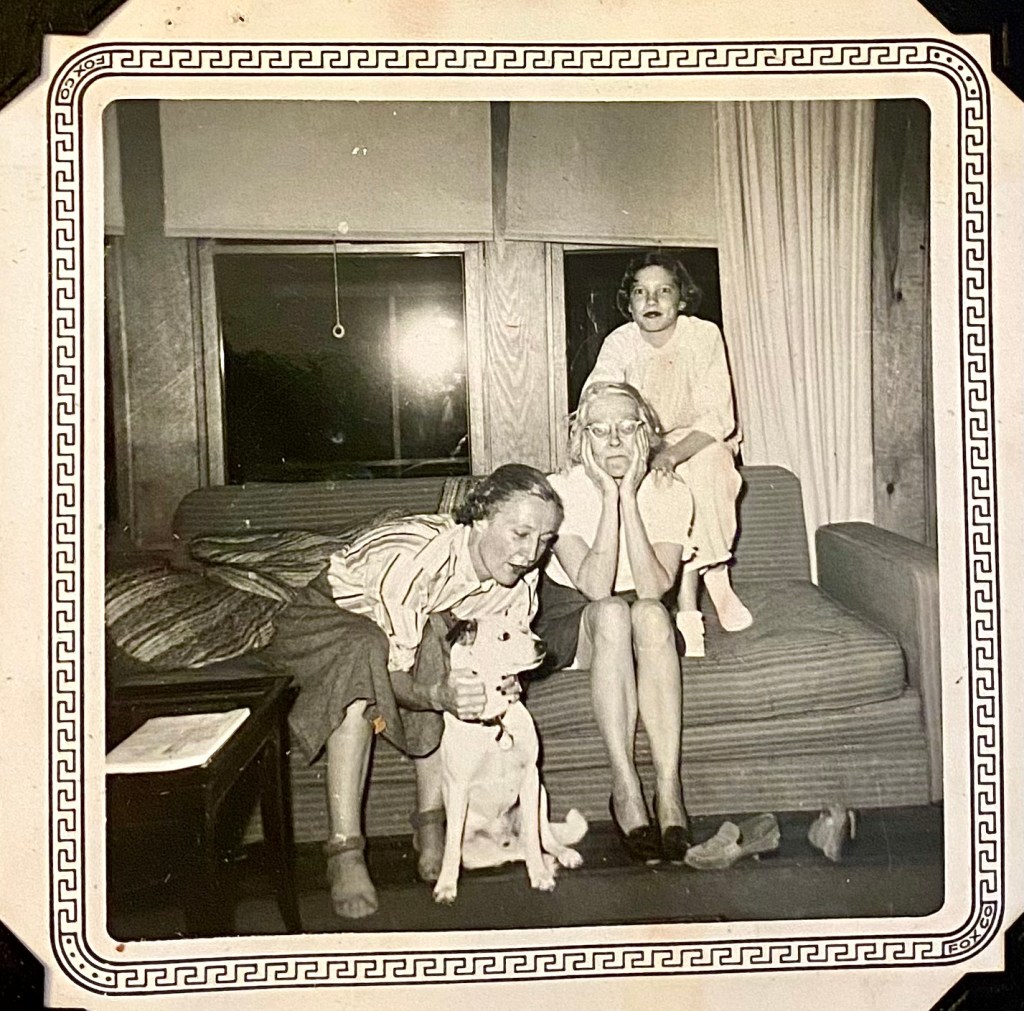
My grandmother, Bobbie, had two dogs during her adult life and their names were: Nip (Nippy, Nipsy, Nutsy) One, and Nip (Nippy, Nipsy, Nutsy) Two. Nip One is seen here above, being given much affection by the rolled-stocking-footed Bobbie, who is hanging out with her mom, Addie, and niece, Laurie, at Fort Henderson Farm one weekend long, long ago, most likely in the mid-1950s.
Nip One died before I was born, but Nip Two — Nutsy to the rest of us — was a mainstay at Bobbie’s house and thus a real star of my childhood memories. Nutsy followed Bobbie everywhere she went, hitched a ride to the Farm each weekend and basically led a charmed life, eating table scraps and disappearing for days into the woods prowling for hot cur dogs to hump. Nutsy smelled terrible. He was always bleeding. He was blind and he hobbled around on mangled dew claws. But gosh if he didn’t love and nerve-nourish my grandmother for MORE THAN 20 YEARS. Oldest emotional support dog ever, that Nutsy.
He died right about the time the sh** started hitting the fan with my grandparents’ health. It was perfect timing. Nutsy and his wild dog ways would DEF not have been welcome at The Forum in Lincoln Heights. Figuring out what to do with Nutsy would have been a tragedy of epic proportion — both for my grandparents, and my own parents who were managing their care, and our own brood of house pets.
The only other senior pet situation I remember was Mama Pennye’s. Mama Pennye was my great grandmother, my dad’s grandma. In her Golden Year heyday, she fed feral cats who lived outside. Mama Pennye was deaf and hilarious and independent for most of her 101 years until she wasn’t and had to spend her final years in a depressing Karnes City, TX nursing home. It’s a good thing her cats weren’t domesticated. It’s a good thing they could just be shooed away toward some unsuspecting neighbor’s house. Everyone was fortunate there wasn’t a collection of little kitties to rehome when it was time for Pennye’s last move.
I think unless our pets are feral or well into their ninth life (or last of four legs), we shouldn’t jump into pet ownership without making it real clear to ourselves and everyone on our team what will happen to these cuddly creatures when we’ve crossed our own rainbow bridge. It doesn’t mean pets aren’t great or that more “seasoned” folks shouldn’t have them, it just means serious planning is MOST DEF required. Would you have a baby at age 75 without going down all the obvious rabbit holes first? Who will care for the baby and get them to school should you pass? Who will support that baby, how and with what? Where will they live if you have a health crisis or can’t live at home anymore? Yeah, no. If you were hell bent on having a baby at age 75 you’d pull your support system in for a family meeting stat and talk about it. You’d set up details and financial arrangements. You’d make sure you had a plan and could afford it and everyone involved would be very clear about any role they might be expected to play.
It’s the same deal with a late-in-life pet acquisition. Study after study shows how enriching and emotionally stabilizing a pet can be for adults in their second half. Our lives can actually be lengthened by their presence. No bones about it — animals are a healing presence. But pets are an expensive, unpredictable and messy long term commitment. Making the decision to have one requires authentic conversation with our loved ones, a realistic vision of the future and a willingness to hear the concerns of family who may think the idea is… Nutsy.
 Grand Plans
Leave a comment