
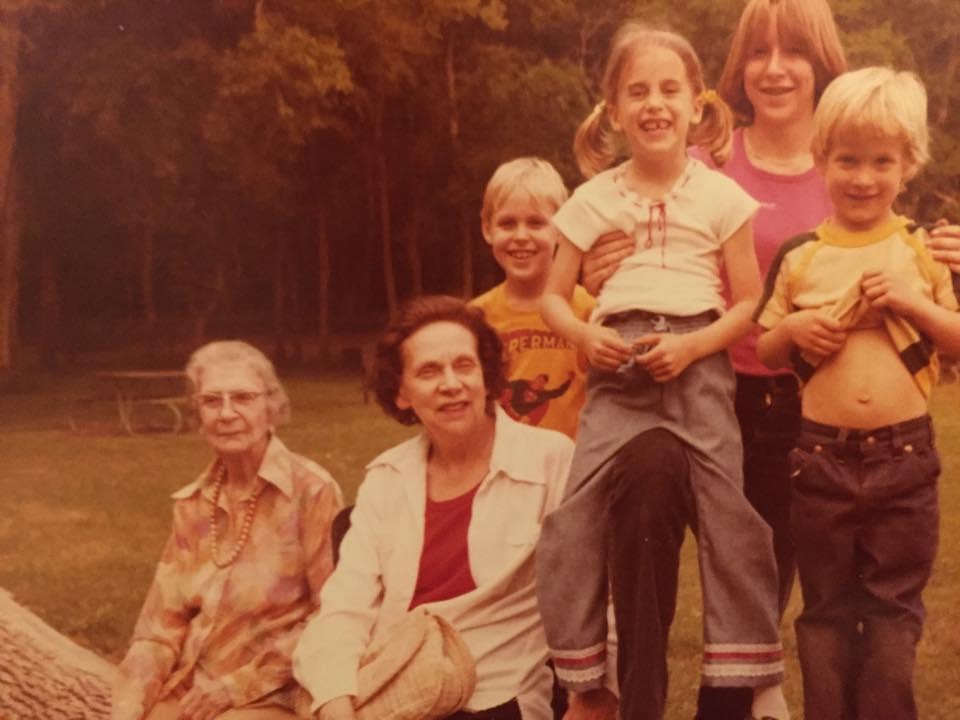
What do we think about the importance of embracing multigenerational roles in our families and communities today? Are we emphasizing it enough? Too much? Could we be leaning into relationships with grand younger and older loved ones a little more? Or less?
The answers to these questions are “in my opinion, it’s important,” yes, yes, yes and yes.
As I see it, American families several generations back (think The Waltons or The Ingalls) were sharing the duties of work, child-rearing, life support and positive influencing. Everyone had a role to play, and often families lived in the same household. Then people started living longer, and working harder and achieving bigger and moving away further all of the sudden the American family/community is comprised of individual folks with individual goals living their own individual experience in their own individual corners of the universe. From my perspective, our society seems to value personal independence and success over multigenerational teamwork, and I think that’s a tragedy — a missed opportunity that is making the aging experience harder (and more destabilizing and expensive!) for adults of every age and stage in a family. Have we taken the grand out of grandparenting?
It’s hard to say. Only a very small fraction of the people to whom I’ve been close in my life have co-parented with or depended on older family members (and vice-versa) during their child rearing experiences and even fewer have embraced a the multigenerational household model. Instead, the relationships I’ve seen are based more on fraternity and fun than they are on function. More levity, less leaning-on. And while it may sound like #winning to stay on the periphery and observe to “somebody else’s” circus from a safe distance, it actually might be a big loss.
Here’s why: when humans of any age assume a family role, they have purpose. It’s like getting a refuel! For us older adults, purpose helps us fire on all cylinders — it juices us up emotionally, cognitively and physically. That’s why having it is one of the big pillars of aging. Socializing, being part of community and continuing to learn are also important tenets — which, hello!, you can totally flex when you’re a key person on your family’s team. Grandparents also have the unique opportunity to share strengths, lessons and experiences with younger family members and “pass on” valuable insight that can change a trajectory. For younger folks, including those in caregiving relationships with older loved ones, this role is an opportunity to learn, sharpen new abilities and engender a passion for service. And on both ends of the spectrum, everyone is winning because everyone is saving BANK in babysitting, carpooling, caregiving, errand-running, bill-paying, life-managing and the like.
It seems like a win-win to me. But I may be in a league of my own here. As a motherless mother whose father did grand-living elsewhere, I have a limited perspective. My grandmother didn’t live with us, but she convalesced at our house from time to time and would come for long visits and cook us goulash and bring us fresh socks from Bill’s Dollar store. We spent most weekends at our Farm with my mom’s parents and went on fun bougie trips with them on occasion. Both sets of grandparents were called in for service on an as-needed basis only. But both managed to squeeze in some church or sewing lessons or “how to not love to cook” classes during their “on-times.” And both passed down their love of bad television and the nightly news. On the flipside, both sets chose to reside in an independent living facility near our home. So no one was saving much on the caregiving front. I wonder sometimes if life would have been any better, or worse, if we were more on the on the scene for each other during my childhood. And what was happening in other households in my neighborhood back then, and ours today?
The view is murky at best. On one hand, a 2020 Pew Research study shows “nearly four-in-ten older adults around the world live with extended family and those in the U.S. rarely do,” while another Pew study from 2022 indicates that between 1971 and 2021, “the number of people living in multigenerational family households quadrupled…reaching 59.7 million in March 2021” with the share more than doubling to 18 percent of the population. That’s a lot of folks who depend on older or younger family members to get by in life.
And this group is growing. According to a recent CBS News story, a Harris Poll for Bloomberg finds “45 percent of people ages 18 to 29 are living at home with their families — the highest figure since the 1940s.” These 20-somethings are moving in with their families for the same reasons older folks do during their Golden Years — to save money and cut down on expenses.
At the same time, I don’t really want my adult kids to live with me too long, and I’m not sure how I’d feel if I had parents and they wanted to age in my place. I like my personal space and privacy! So maybe there’s a healthy “in the middle” space where we can understand the importance of playing a key role in our families’ lives and lean in with big love and purpose when it feels right and best to do so. Maybe that’s putting the grand back in grandparenting.
 Grand Plans
Leave a comment