
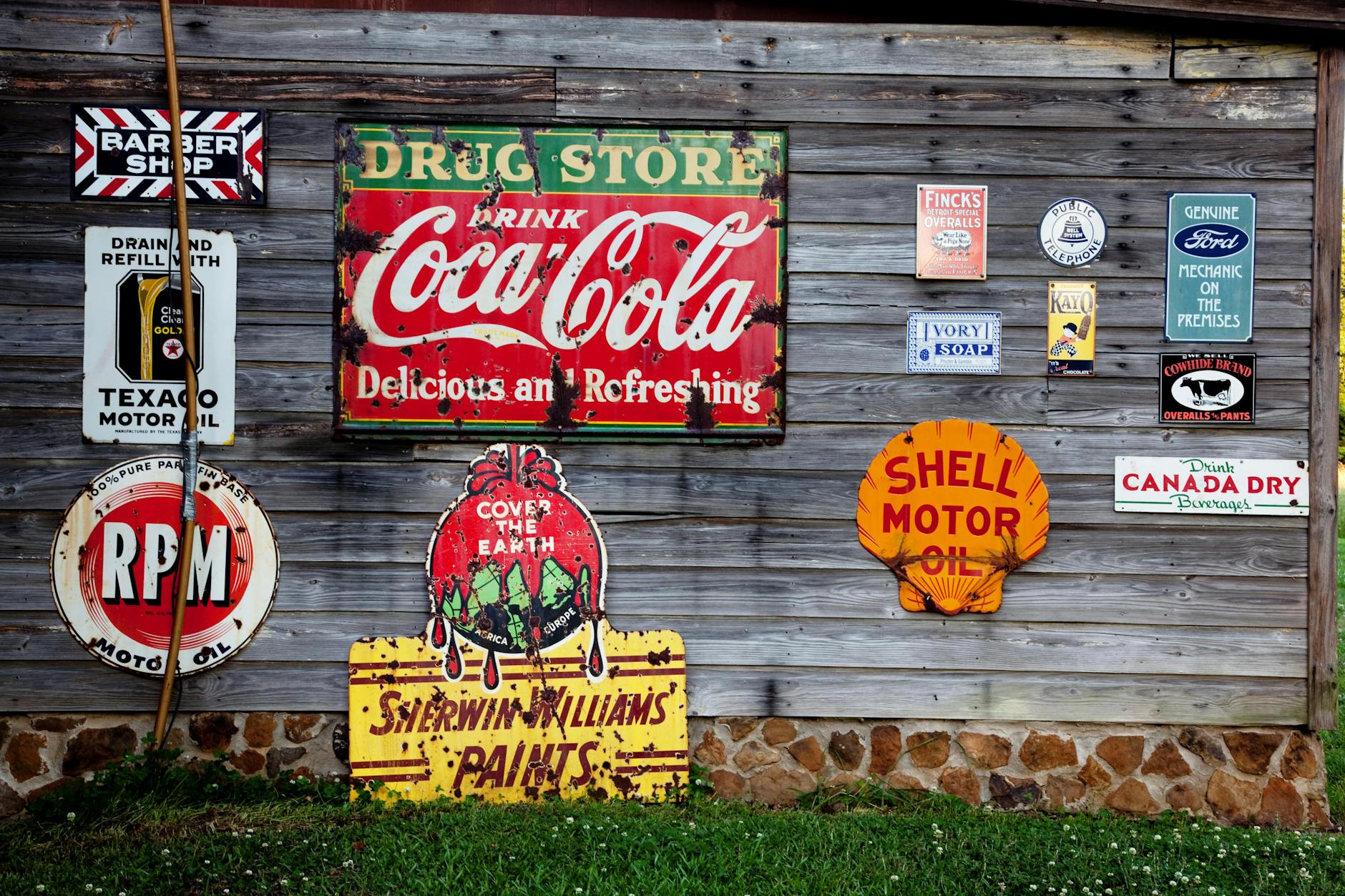
During high school, I was so bad in math that I failed Algebra II and was exiled to typing and Journalism classes, which is precisely where I learned how to read signs — an exponentially more useful life skill than passing dumb old Algebra, am I right? (All you Boo-math folks, can I get an amen?) Journalism taught students like me how to ask questions, listen and find the story while typewriting helped us master the instrument essential to manifesting it all — a keyboard that could give words and symbols to all the ideas, stories, trends and yes, signs, out there calling out for some attention and expression.
So, yeah, sign-reading is legit street cred and thanks to my failures in Algebra II, I proudly have myself some. Before I lose you, let’s get back to the point and the intention of today’s post: I read a Schlemiel! Schlimazel!-ton of geriatric/senior-related research and stories every day and see some major danger signs on the Grand Plans horizon that we need to acknowledge and address and prepareth ourselves for. Perhaps you’ve seen these signs, too, and I’d actually be surprised if you haven’t. Here are the big, red, flashing light signs I see ahead:
Sign 1: “The U.S. population age 65 and over grew nearly five times faster than the total population over the 100 years from 1920 to 2020, according to the 2020 Census. The older population reached 55.8 million or 16.8% of the population of the United States in 2020…By 2030, all baby boomers will be age 65 and over.” — U.S. Census Bureau
Sign 2: “The number of Americans ages 100 and older is projected to more than quadruple over the next three decades, from an estimated 101,000 in 2024 to about 422,000 in 2054, according to projections from the U.S. Census Bureau. Centenarians currently make up just 0.03% of the overall U.S. population, and they are expected to reach 0.1% in 2054.” — Pew Research Center.
Sign 3: “Most retired Americans believe they will need nearly $1.5 million in the bank to retire comfortably, according to a new study. The majority of retirees surveyed believe that they will need $1.46 million in the bank to retire comfortably, according to Northwestern Mutual’s 2024 Planning & Progress Study. That’s a 15% increase — which far outpaces the 3% to 5% inflation rate — over last year and is up 53% from 2020. That $1.46 million is in sharp contrast to the average amount that U.S. adults have saved for retirement — a meager $88,400 compared to $89,300 in 2023. Given that 11,000 Americans will turn 65 every day through 2027, only half of Boomers and Gen Xers believe they’ll be financially ready for retirement when the time comes.” — Kiplinger, April 2024
Sign 4: “Someone turning age 65 today has almost a 70% chance of needing some type of long-term care services and supports in their remaining years.” — LongTermCare.gov
Sign 5: “New data from the Bureau of Labor Statistics show the price of in-home care for the elderly increased by 14.2 percent between March 2023 and 2024.” — The Hill, April 10, 2024
Sign 6: “As seniors swell with aging baby boomers, most say they hope to age in place. But that may not be possible, experts at Harvard’s Joint Center for Housing Studies (JCHS) predict. They note that there is an acute lack of safe, affordable, and accessible housing options to accommodate this swelling demand. JCHS projects that U.S. households headed by someone more than 80 years old will number 17.5 million in 2038—more than twice the 8.1 million of 2018— accounting for 12 percent of all households.” — Harvard Magazine, March 2023
Sign 7: “In-home caregivers are in high demand, whether paid directly by clients or through long-term care insurance, nonprofit organizations, state funding or government programs such as Medicaid. There are nearly 2.3 million such aides in the U.S., but the positions of home health and personal care aides are projected to grow at a rate higher than the average for all occupations over the next decade. The Federal Bureau of Labor Statistics projects employment for these jobs will grow by about 25 percent by 2031. More than 700,000 openings for such workers are projected each year, on average, over the next decade…Some 3 out of 5 U.S. nursing homes have limited new admissions now due to staffing shortages, according to a June survey by the American Health Care Association of 759 nursing home providers. And nearly 3 in 4 are concerned that they may have to close their facilities over staffing problems.” — AARP 2022
Sign 8: “As the nation’s population of older adults swells, so, too, does demand for housing that is both affordable and able to accommodate older adults’ changing needs. Housing is expensive for many older adults, whose incomes often are fixed or decline over time. In 2021, nearly 11.2 million older adults were cost burdened, meaning they spent more than 30 percent of household income on housing costs, an all-time high and a significant increase from the 9.7 million recorded in 2016. Likewise, homelessness is rising among older individuals. Though government programs provide crucial housing assistance to millions of older adults, demand dramatically outstrips supply, with years-long waitlists in some areas.“
Collectively, these signs point to one big headline: There are a great, increasing many of us who will be heading into our much longer-lasting Golden Years with fewer financial resources, a shortage of caregivers and and a major dearth of affordable housing options and senior living arrangements. That’s the story, according to my sign-reading abilities I honed in high school journalism and typing and later through a 30-year career in business reporting, neighborhood news and communications. Facts is facts. Signs is signs. It’s time to make sure your Grand Plans line up accordingly.
 Grand Plans
Leave a comment