
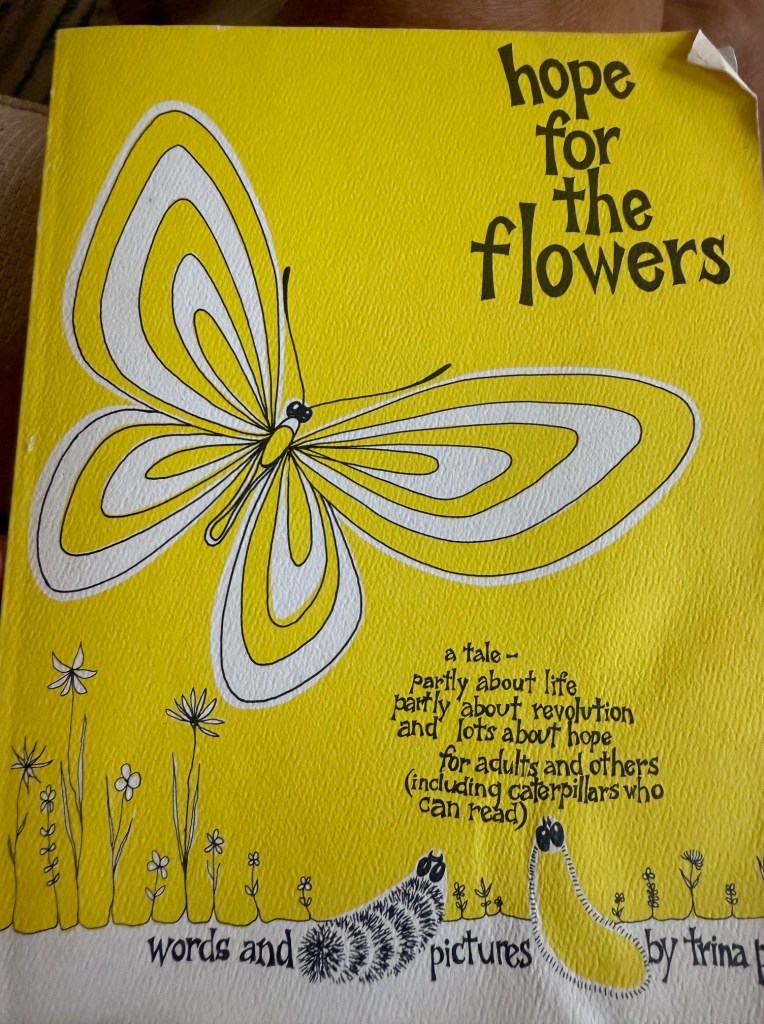
I received this book from my journalism mentor in 1995 — it is so sweet and powerful and right on point for the purpose of this post. More on Hope for the Flowers and why it’s significant in a minute.
First let’s talk about Harvard professor Arthur C. Brooks, who’s From Strength to Strength: Finding Success, Happiness, and Deep Purpose in the Second Half of Life book should be required reading for all of us privileged enough to be aging in these times. One of his big points is that we move from fluid to crystalized intelligence through our careers and into life’s second half, a phenomenon that can bring us great joy and satisfaction if we embrace it with intention. In dumdum talk, that means we strive to do our work well and develop unique strengths that as we age, should become the material with which we teach, mentor and usher others forward. At least that’s my take. As Brooks said, we move from innovation to insruction.
Here’s a recent reel he shared that explains fluid vs. crystalized intelligence, brilliant:
This thinking aligns beautifully with Step 17 in my book, Grand Plans 2.0: How to Mitigate Geridrama in 20 Easy Steps, which is: “Give and mentor: Invest in younger generations, service and others.” Wait, you may be thinking — I thought grand planning was about getting your advance directives, legal documents and financial plans in place to thrive during life’s second half? Well, grand planning is definitely about all of those things, but it also is about letting nature take its course and getting comfortable with the new roles we have to share wisdom as we age, to develop crystalized intelligence for the benefit of others. To refuse this opportunity or hide from it or to willfully continue striving, well that’s kind of a you-know-what move. It’s selfish and not the way our brains were designed to operate.
So, if you haven’t already, today is a great day to consider how your unique strengths, skills and perspectives — from your professional development or your special brand of personal excellence — can be shared with others as you age. Everyone has a rare form of crystalized intelligence to give! Call it mentoring, teaching, guiding, leading, counseling, coaching, guru-ing, tutoring, preparing, supporting, advising, showing, instilling, sharing, giving or supporting, this calling is a hallmark of getting older and one we must approach with intention. That is, unless we want our headstone to read “RIP: Here Lies a Self-Centered A-Hole.”
Not sure where to begin? Think about what you really excelled at in your work, whether that was a cubicle or C-suite at a Fortune 500 company, or in the nursery where you raised six children as a fulltime parent. Maybe your life passion was planting corn and you were really good with a plough. Perhaps you were a successful fundraiser or volunteer who could snap their fingers and make big donations happen. Whatever your work was or is, what made you really good at it? Maybe you were a baby whisperer or excellent cook. Maybe you know all the tricks when it comes to training dogs. You likely kick-a** at a number of personal and professional things. A review of your strengths and life interests can help identify what pearls of wisdom may be available for repackaging and sharing with others.
Another good place to mine crystalized intelligence is your shizziest life moments. What were some of the most horrible times in your life? What crises did you navigate? What nearly sank you? What was big, bad and ugly? What have you lost? Our darkest days define us and give us an arsenal of resilience that can help others through similar situations. I personally believe life’s lowest moments become our biggest strengths. At least they become our strengths when we commit to helping others with the lessons we learn from them. I know, deep. But so true, I think!
Once you have a handle on what your strengths have been and what you have to share, start looking for opportunities to align this expertise with organizations or individuals who might benefit from them. Maybe there’s a nonprofit that could use your leadership experience or a formal mentorship program that pairs adults with rudderless teens. Or it could be an adult child or grandchild or one of their friends with whom you can connect and impart your unique style of wisdom.
Here are a few other ways to consider your personal brand of crystalized intelligence and how you can share it during life’s second half:
- Community Education & Workshops: Design short courses, talks, or lunch-and-learn sessions at libraries, community centers, or senior centers.
- Intergenerational Programs: Volunteer with organizations that pair older and younger participants—such as Big Brothers Big Sisters, school tutoring programs, or intergenerational arts and music projects.
- Board or Advisory Service: Serve on nonprofit boards, school advisory councils, or neighborhood planning committees.
- Skill-Based Volunteering: Donate specific professional skills (communications, finance, tech, law, design) to nonprofits or social enterprises.
- Writing, Blogging, or Podcasting: Share wisdom through articles, a personal blog, or a podcast featuring interviews and practical lessons.
- Faith or Civic Group Leadership: Lead discussion circles, adult education classes, or service committees within a church, synagogue, mosque, or civic club.
- Career Transition or Retirement Coaching: Offer pro bono coaching for mid-career professionals or those approaching retirement.
- Youth Sports or Arts Coaching: Coach a team, direct a play, or guide a music ensemble.
- Community Storytelling & Oral History Projects: Collect and preserve local or family histories or facilitate story-sharing events.
- Listen and Spend Quality Time with Younger Folks: This may be the simplest approach. Just make time with the younger people in your life and see where the conversation takes you and what insights you might offer them. Real-talk and earnest listening can yield many opportunities to meet needs!
By intentionally channeling our lifetime of knowledge into roles like these, we not only enrich each other’s lives but also keep our own crystallized intelligence growing and relevant.
Finally, let’s loop back to Hope for the Flowers. In my banged up, thumbed through copy of it, my forever mentor Beth Zacharias — editor of The Austin Business Journal during the early 1990s and a longtime, highly regarded journalist with American City Business Journals — wrote this:

Beth gave me this book when I was leaving the ABJ newsroom — where I had my first fulltime reporting job covering healthcare and tourism under Beth’s mentorship — for the Jacksonville Business Journal and life as a newly married baby adult. It was everything to me. And to this day I pick it up and learn from it. I am so grateful someone was gracious enough to show me the way. And I’m thankful for the many adults who have mentored, loved on and helped me find my wings since.
Here’s Deepak Chopra synopsis and review of this precious, powerful book: ““In this book, two caterpillars get caught up in the fallacy of competition and struggle to reach the top of a caterpillar pile. By journey’s end, however, they learn that their true nature is not one of winning and being at the top, but of going within and emerging as beautiful butterflies who were born to soar.”
I think that’s what life teaches us…that we spend a good amount of time at work and home striving and climbing and attempting to soar. And once we’re good at it, we are engineered to pass that knowledge and expertise on to others. No cap. End of story. How will you continue yours through mentoring others today? How are you helping the caterpillars in your life fly?
 Grand Plans
Leave a comment